
LAX Airport Enhances Passenger Health and Restores HVAC System Performance Through Ultraviolet-C Technology
Los Angeles, California
Download Case Study PDF- $180,000
- Potential annual savings
- 200+
- AHUs treated
- 9
- Terminals covered
- 75M+
- Annual passengers protected
The Challenge
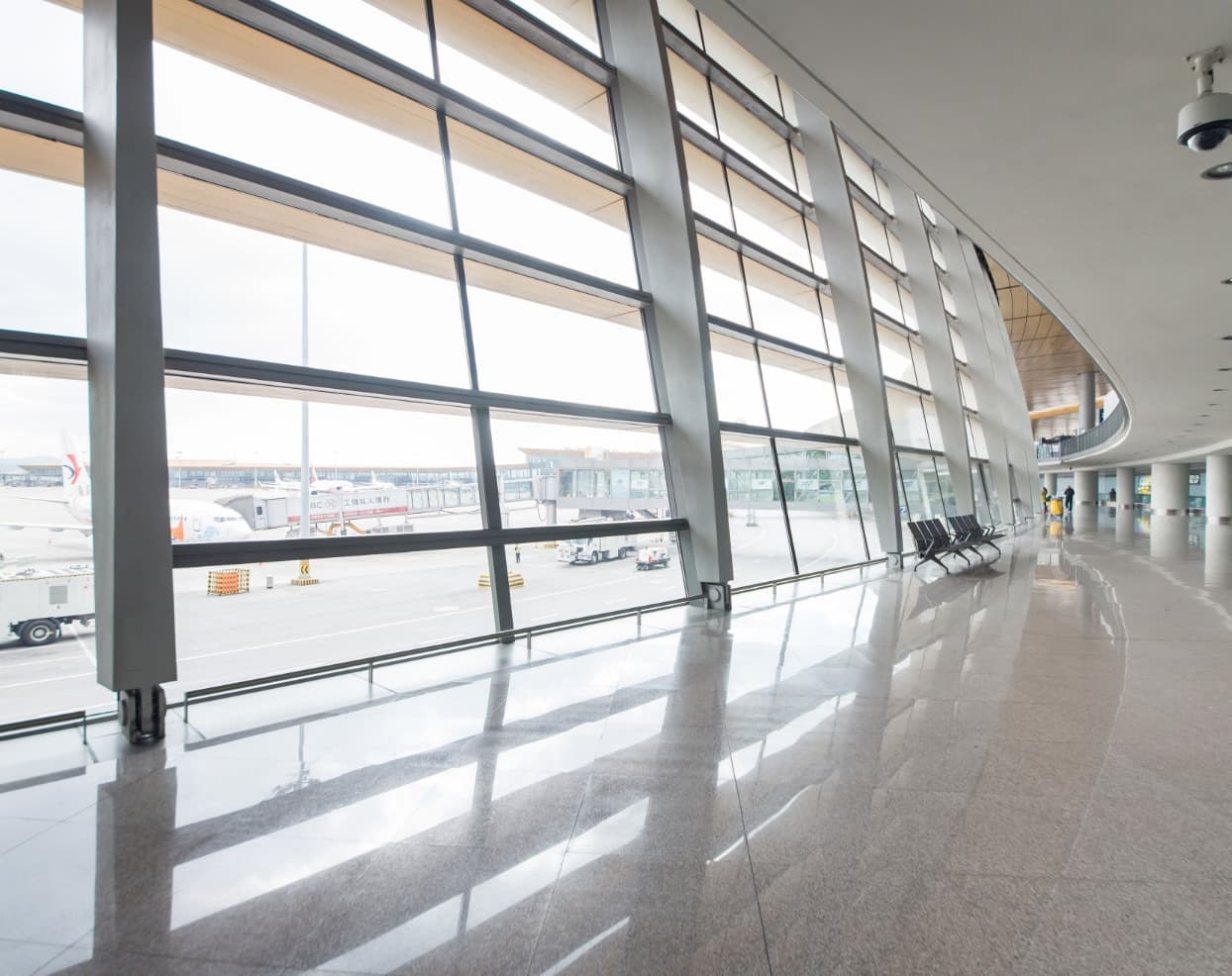
With nine terminals totaling several million square feet of floor space, Los Angeles International Airport (LAX) is massive — the 75 million passengers who passed through it in 2015 made it the world's seventh busiest airport. While solving a minor air conditioning issue, one facility manager identified a way to improve indoor air quality for the entire airport. "A tenant in Terminal 2 complained of a musty smell in their offices," recalls Richard Yakel, the airport's air conditioning supervisor. "We quickly determined that the odor resulted from the buildup of mold and bacteria on the air handler evaporator coil — a very common condition, especially given our humid, seaside environment." Although Yakel's maintenance crews could remove the mold with solvents, he knew mechanical cleanings and antimicrobial agents were only a temporary solution. The organic buildup on the coil had also caused a pressure drop that reduced the volume of air passing through the coil and its heat-transfer efficiency. He reasoned that if there was trouble in one of the airport's 200+ AHUs, similar conditions might be found in others.
“My team and I were surprised by how quickly the germicidal wavelength cleaned the HVAC evaporator coil, fan motor housing and blades. However, we were truly stunned to witness a 15 percent (2,000 cfm) increase in airflow levels after just a week of operation.”
The Solution
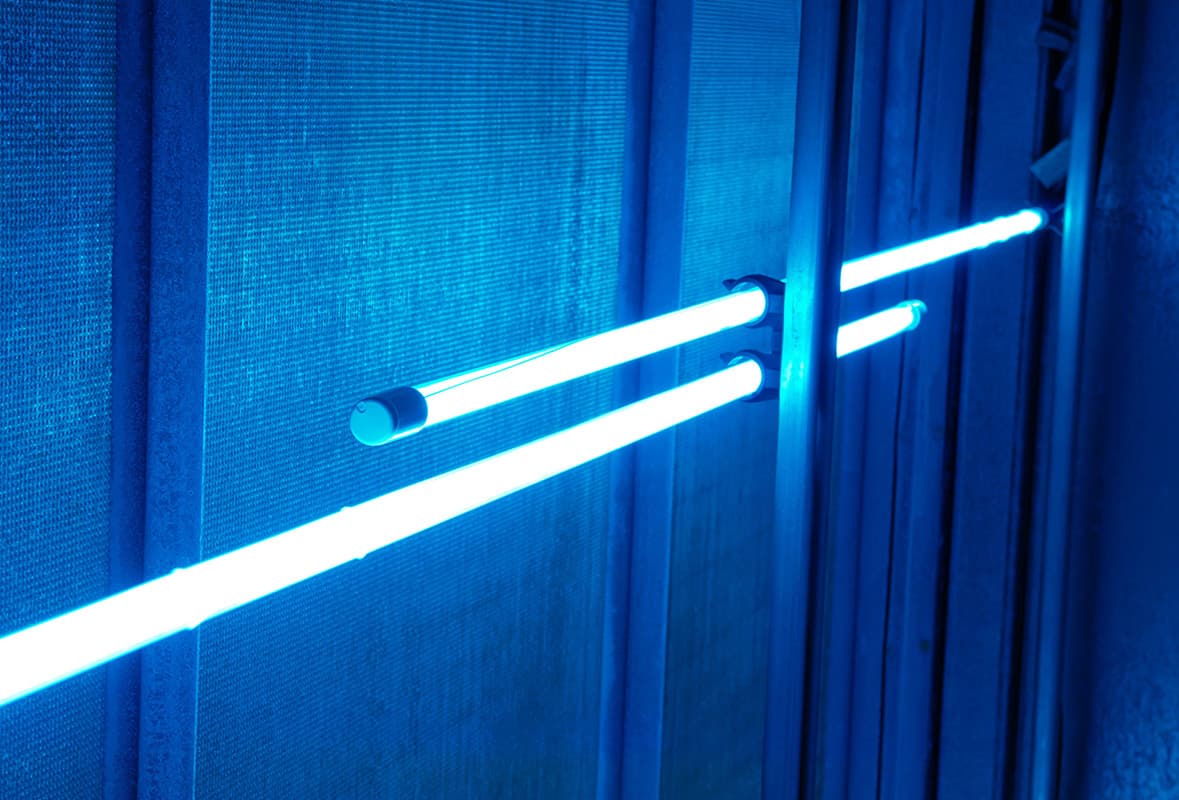
Seeking a more permanent solution, Yakel turned to UV germicidal irradiation (UVGI) as a cost-efficient and lasting means to remove biological growth in HVAC cooling coils, plenum interiors, drain pans and air filters. He decided to conduct a test installation on the odorous AHU first, measuring the unit's static pressure and airflow levels as a baseline. High-output UV-C fixtures were installed in the 14,000 CFM AHU. "My team and I were surprised by how quickly the germicidal wavelength cleaned the HVAC evaporator coil, fan motor housing and blades. However, we were truly stunned to witness a 15 percent (2,000 cfm) increase in airflow levels after just a week of operation." Almost immediately, the troubled air handler was able to meet thermostat set points and there was no odor. The technology was then deployed across all 200+ air handlers airport-wide. UV-C was included in the HVAC design standards for LAX as part of a multi-year, $4.11 billion improvement and redevelopment project.
Results
"The lack of organic growth on the coils has also improved the heat-transfer efficiency and airflow levels, thereby reducing electrical consumption," says Yakel. "I have personally inspected the drain pans and plenums of several units and have seen no mold growth." At the end of the first three-year contract period, more than 75 air handlers had been retrofitted with UV-C. The UV-C fixtures reduced maintenance costs significantly — with union positions earning an average $28 per hour, the typical eight-hour physical air handler cleanings were each costing roughly $230 and needed to be performed on a quarterly basis. At nearly $900/year per AHU multiplied across 200 AHUs, the technology has the potential to save upwards of $180,000 annually in maintenance costs alone. "We haven't had any more complaints," says Yakel. Workers can prefabricate rows of fixture assemblies in the shop, then install them for a medium-sized air handler in a single work shift — typically from midnight to about 5:00 a.m.
- $180,000
- Potential annual savings
- 200+
- AHUs treated
- 9
- Terminals covered
- 75M+
- Annual passengers protected
- 15%
- Airflow increase in 1 week
Your facility could be next.