
Safer Church Services with UV Air Disinfection
Ventura County, California
Download Case Study PDF- CDC
- Endorsed technology
- Continuous
- Germicidal protection
- Zero
- Service disruption
- 1867
- Oldest church in county
The Challenge
While traveling to a family wedding, long-time church member Nancy Merrick, MD, MSPH, spotted UV disinfection fixtures — about the size and length of two shoeboxes — mounted near the ceiling throughout the TSA security screening area at Syracuse Hancock International Airport (SYR). She spoke with TSA staff and learned that germicidal UV-C fixtures could be found in many hospitals, municipal facilities, sports arenas, commercial lobbies, and other high-traffic communal areas. Upon returning home to Ventura, Dr. Merrick conducted further research showing UV-C had been used successfully for decades to disinfect air, water and surfaces, and is endorsed by the CDC to reduce infectious aerosols. When the COVID-19 pandemic forced parishioners away from in-person fellowship, Dr. Merrick brought a carbon dioxide monitor into the sanctuary to measure ventilation levels. "When CO2 levels rose to a certain level, we would open windows and doors and adjust portable fans to improve the room's ventilation levels," explains Louis Vigorita, former president of the Church's Board of Facilities. "Sometimes these actions proved unpopular and uncomfortable, especially on very hot or cold days."
“Since we installed the UV disinfection systems, our congregation has had no outbreaks. UV disinfection is a proven and nontoxic means of reducing the risk of airborne disease so the air we breathe is safer.”
The Solution
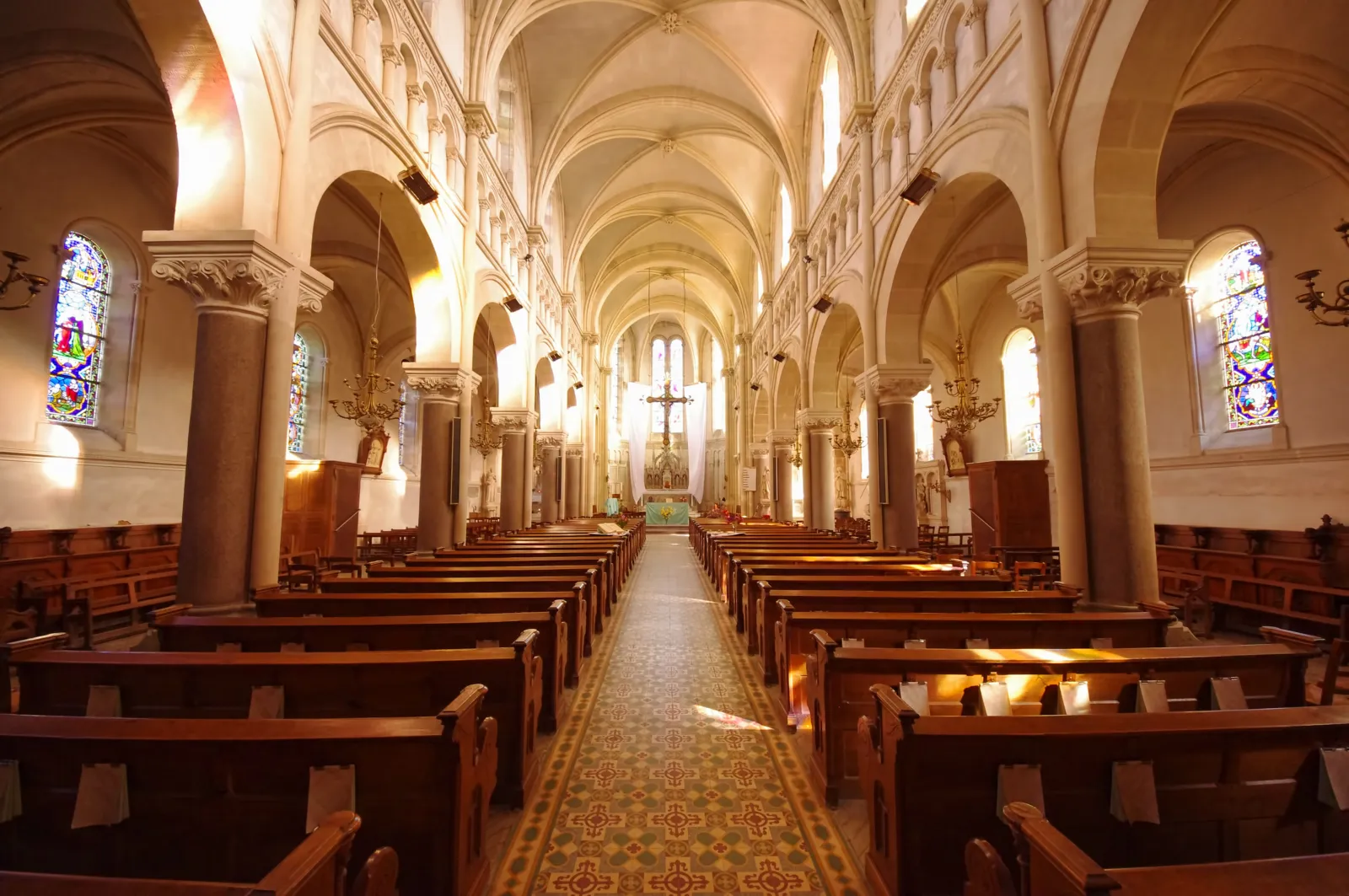
Once church administrators approved UV disinfection, Vigorita turned to a germicidal specialist who recommended the GLO series of Upper Room UV-C fixtures. After conducting a site visit, two types of upper-room UV-C units were specified to protect the church's 50×37-foot, 200-person sanctuary: two GLO-225 baffled luminaries mounted above occupants' heads on either side of the rectangular sanctuary, and a GLO-1500 open-ended fixture at the rear of the worship area, where UV-C energy blankets the upper air in the cathedral ceiling. Both fixtures utilize an exclusive, high-spectral parabolic reflector system to maximize germicidal output levels. One installation challenge was positioning the fixtures so the UV-C energy was safely above the church's 30-member choir loft. All fixtures were safety tested to meet CDC guidelines. The upper-room fixtures leverage the continuous natural rise-and-fall of convection currents to lift airborne infectious agents overhead, where they are inactivated by UV-C energy — completely invisible to worshippers below.
Results
Services continued without any disruption. The UV disinfection fixtures are active when congregants are in the sanctuary and during choir practice. "The safety of our church community is our top priority and we've taken multiple measures to mitigate risks to our congregants," says Vigorita. "Since we installed the UV disinfection systems, our congregation has had no outbreaks. UV disinfection is a proven and nontoxic means of reducing the risk of airborne disease so the air we breathe is safer." It is the same type of UV disinfection technology installed extensively at nine Los Angeles community colleges. While hospitals and schools have used UV disinfection technology since the 1930s to control airborne infectious diseases, its application in houses of worship, dormitories, restaurants and courthouses is relatively new.
- CDC
- Endorsed technology
- Continuous
- Germicidal protection
- Zero
- Service disruption
- 1867
- Oldest church in county
- 200-person
- Sanctuary protected
Your facility could be next.